
How Education Content Development Services Improve Learning Outcomes in 2026
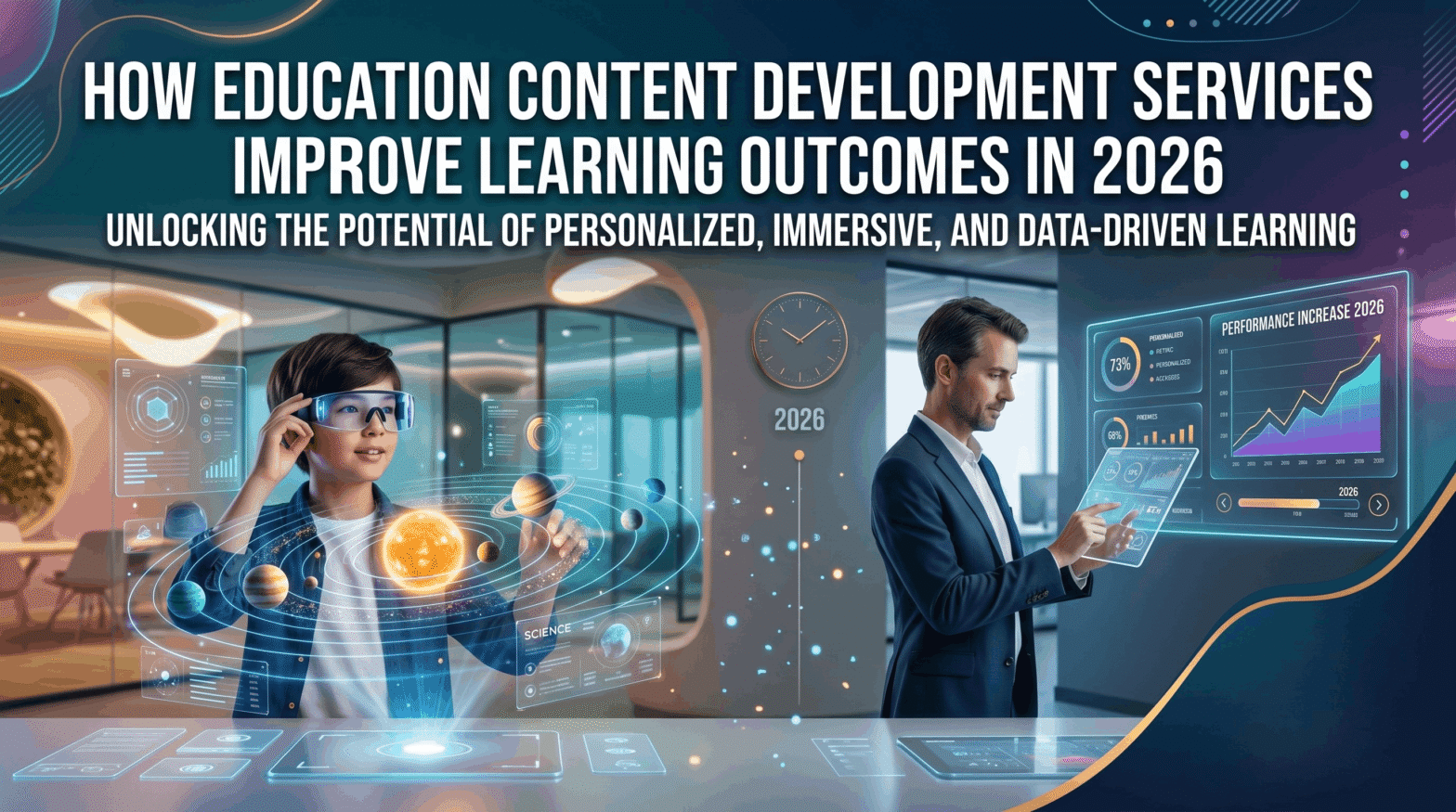
In the rapidly evolving landscape of 2026, the “one-size-fits-all” approach to schooling has officially become a relic of the past. As artificial intelligence, immersive reality, and data analytics converge, Education Content Development Services have transitioned from being simple digital publishers to the architects of high-performance learning ecosystems.
If you are an educator, an EdTech founder, or a corporate L&D leader, understanding how specialized Education Content Development Services drive measurable success is no longer optional—it is a competitive necessity.
1. AI-Powered Personalization: The “Spotify-fication” of Learning
By 2026, content is no longer static. Modern Education Content Development Services now build Adaptive Learning Objects. These are modular pieces of content that change in real-time based on a student’s unique performance data.
- Real-Time Scaffolding: If a student struggles with a calculus concept, the system dynamically generates a foundational sub-lesson.
- Predictive Analytics: Content services now integrate “Early Warning Systems” into their modules, flagging exactly where a learner’s engagement drops.
2. Immersive Reality and “Spatial” Education Content Development Services
Gone are the days of just reading about the Roman Empire or chemical reactions. Leading Education Content Development Services are now prioritizing Spatial Learning through AR and VR.
- Virtual Labs: Students perform high-risk chemistry experiments in a zero-risk VR environment.
- Historical Simulations: Content developers create 360-degree interactive environments where history students “walk” through the Silk Road, improving long-term retention by up to 75%.
3. Microlearning for the Modern Attention Span
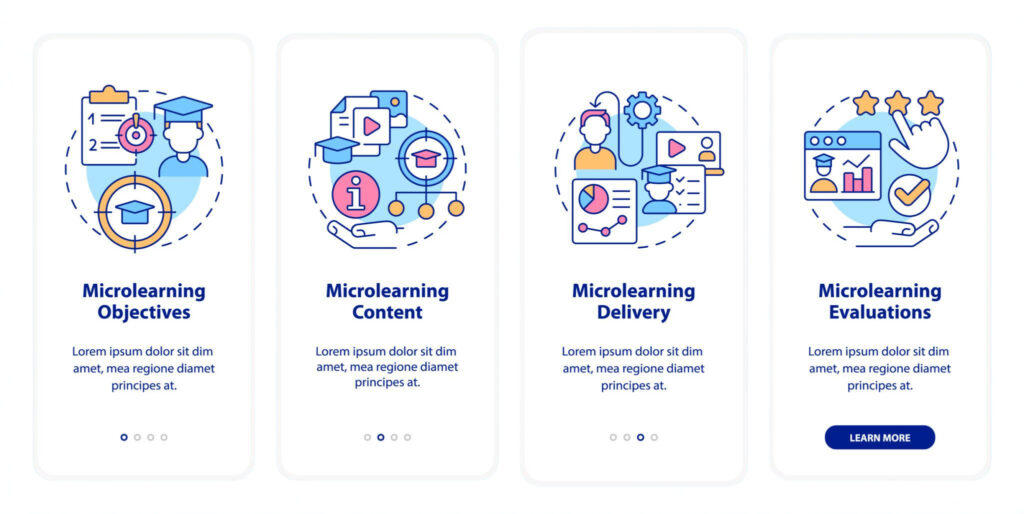
In 2026, the 60-minute lecture has been replaced by micro-pathways. Professional Education Content Development Services now focus on high-impact, short-form delivery:
- Bite-Sized Modules: 3–5 minute “knowledge nuggets” designed for mobile-first consumption.
- Just-in-Time Delivery: For corporate learners, content is delivered via prompts within project management tools, ensuring immediate application of skills.
4. Prioritizing Accessibility and Universal Design (UDL)
Inclusivity is a primary driver for learning outcomes in 2026. Top-tier Education Content Development Services now utilize AI to ensure 100% accessibility from the moment of creation:
- Multi-Modal Delivery: Every lesson is simultaneously available as text, audio, video, and interactive braille-ready formats.
- Instant Translation: Content is developed to be “language-agnostic,” allowing schools to support diverse student bodies with real-time, high-quality translations.
5. Data-Driven Content Iteration
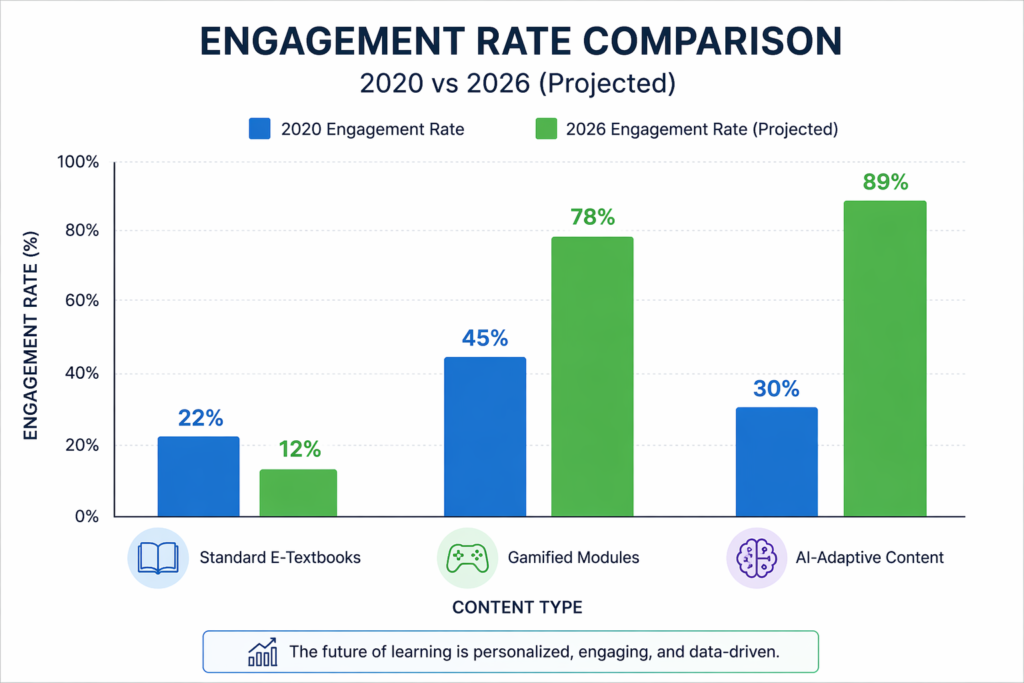
The biggest shift in 2026 is that content development never “ends.” Through Continuous Improvement Loops, Education Content Development Services use anonymized data to see which paragraphs are being re-read and which videos are being skipped.
Conclusion: The Human-AI Partnership
While technology is the engine, Education Content Development Services provide the fuel. By 2026, the most successful learning outcomes aren’t coming from the flashiest tools, but from the most thoughtfully engineered content that treats every learner as an individual.
Investing in professional Education Content Development Services isn’t just about making “pretty” slides; it’s about using the 2026 tech stack to close the achievement gap and foster true mastery.
Latest Blog
- Curriculum Mapping Services for U.S. Schools and Educational Publishers
- How to Reduce Corporate Training Costs Without Compromising Learning Quality
- How to Create Interactive Digital Textbooks for K–12 Publishers in the USA
- Scenario-Based Learning Development Services for Corporate Training
- How eLearning Solutions Help Businesses Improve Employee Training and Performance