
Trusted by 5000+ clients across the world







120k+
Students Worldwide
15k+
Job Placement
Why Accessibility & WCAG Compliance Matters
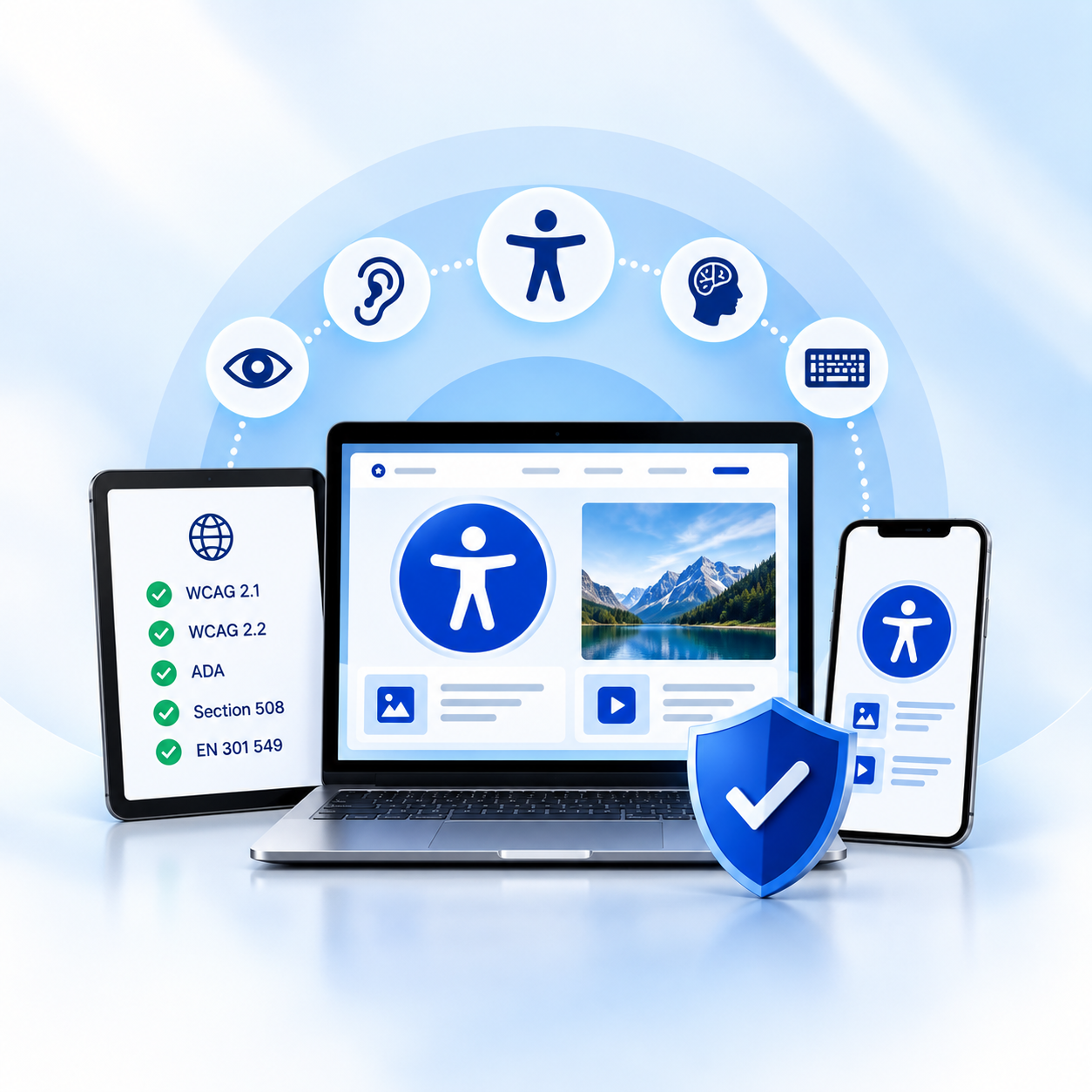
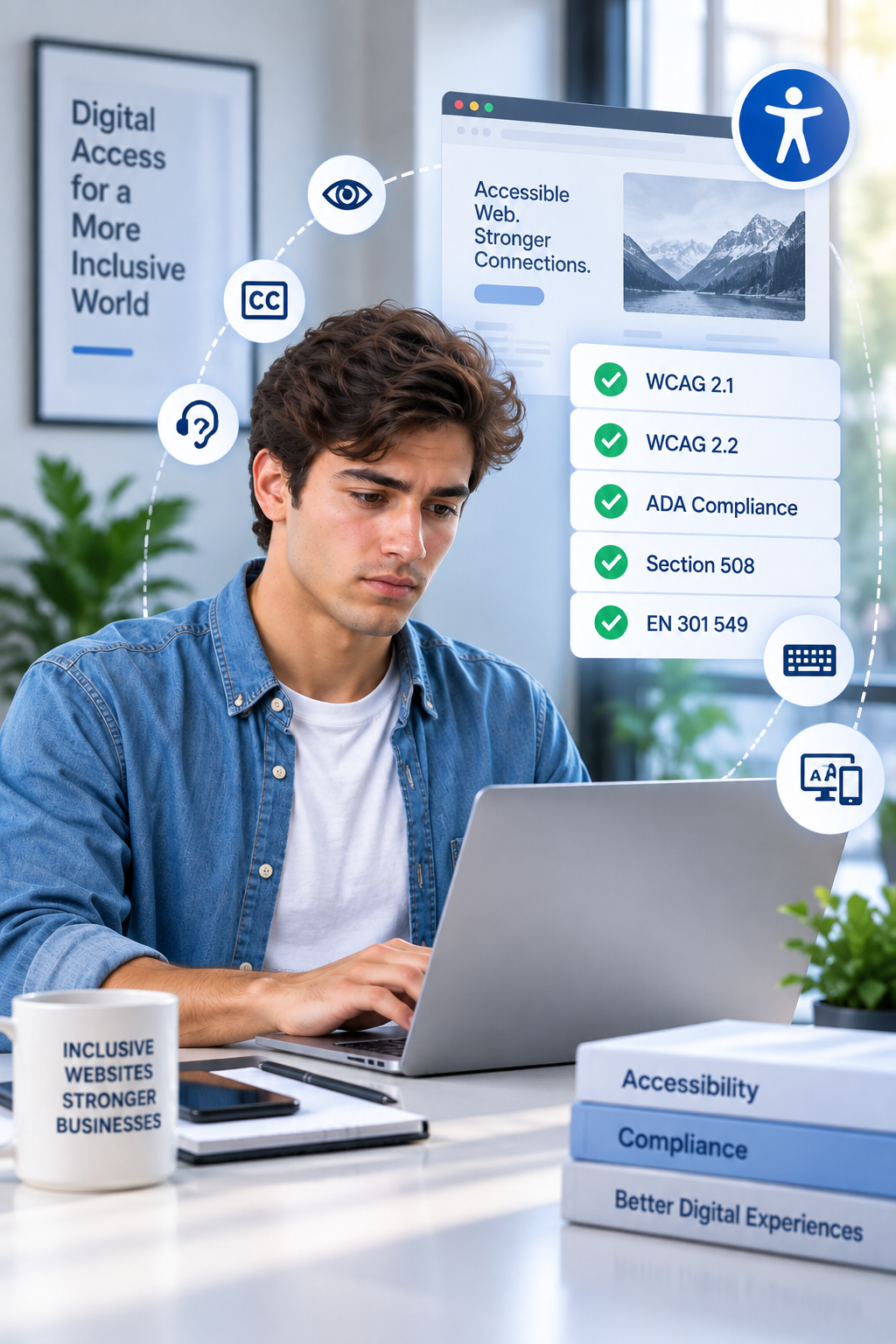
Inaccessible learning content excludes learners using screen readers, keyboard navigation, or other assistive technology — and increasingly exposes organizations to legal risk under ADA, Section 508, and the European Accessibility Act. Remediation isn’t just about avoiding lawsuits; it’s about ensuring the content actually works for every learner it’s meant to reach.
We approach accessibility as a design discipline, not a post-production patch — reviewing content structure, color contrast, alt text, keyboard navigation, and screen-reader compatibility against the specific WCAG success criteria that apply.
Beyond legal exposure, inaccessible content has a direct business cost — procurement teams at many institutions now require accessibility documentation before purchase, meaning non-compliant content can be disqualified from consideration entirely regardless of quality. Treating accessibility as core content quality, not an afterthought, protects both market access and legal standing simultaneously.
Common Challenges This Solves

Content fails automated or manual WCAG audits.

Procurement processes require VPAT/ACR documentation you don't have.

Legal or compliance teams have flagged accessibility risk exposure.

Screen reader and keyboard-only users report content is unusable.

What’s Included
- WCAG 2.1/2.2 AA remediation for existing content
- Accessibility-by-design for new content builds
- VPAT/ACR (Voluntary Product Accessibility Template) reporting
- Section 508 compliance support (US federal requirements)
- European Accessibility Act (EAA) compliance support
- Screen-reader and assistive-technology testing
- PDF and document accessibility remediation
- Color contrast and visual design accessibility review
- Staff training on accessible content creation practices
Key Benefits
- Reduced legal and compliance risk under ADA, Section 508, and EAA
- Content that genuinely works for screen reader and assistive technology users
- Procurement-ready VPAT/ACR documentation for institutional sales
- Improved usability and SEO as side benefits of accessible structure
- A defensible, documented remediation process if compliance is ever challenged
Who We Serve

K-12 & Higher Education Publishers
Accessible courseware that meets procurement requirements and reaches every student.

Corporate L&D Teams
Accessible training content that reduces legal exposure and reaches every employee.

EdTech Companies
Accessibility-by-design support for platforms and products from the ground up.

Procurement & Legal Teams
Documentation and risk-reduction support for teams managing accessibility compliance as part of vendor evaluation or legal risk management.
How We Work
Audit
We assess current content against WCAG success criteria.
Report
You receive a detailed findings report with severity ratings.
Remediation
Our team fixes issues, from alt text to structural navigation.
Testing
Remediated content is tested with assistive technology.
Documentation
Delivered with VPAT/ACR reporting where required.


Why Choose Dimentics
- Testing performed with real assistive technology, not automated scans alone.
- Remediation handled by specialists trained specifically in WCAG success criteria.
- VPAT/ACR reporting produced in-house, not outsourced to a third party.
- Accessibility integrated into every other Dimentics service, not sold in isolation.
Tell Us How We Can Support Your Success
Looking to enhance employee skills, leadership capabilities, or workforce performance? Our WCAG Accessibility & Compliance Services are designed to help organizations build skilled, engaged, and future-ready teams.
Let’s discuss how we can help your institution enhance learner engagement, modernize academic programs, and achieve long-term educational success.
Frequently Asked Questions

WCAG (Web Content Accessibility Guidelines) compliance means content meets defined success criteria — covering perceivability, operability, understandability, and robustness — so it’s usable by people with disabilities, including those using assistive technology.
WCAG is the underlying technical standard. Section 508 is a US federal requirement referencing WCAG for federally funded content. The European Accessibility Act (EAA) is an EU-wide law requiring accessible digital products and services, also built on WCAG standards.
Yes. Dimentics produces VPAT/ACR (Voluntary Product Accessibility Template / Accessibility Conformance Report) documentation as part of its accessibility compliance services.
Yes. Dimentics audits and remediates existing eLearning, documents, and digital content against WCAG 2.1/2.2 AA success criteria.
Yes. Remediated content is tested with screen readers and other assistive technology to confirm real-world usability, not just automated-scan compliance.
Yes. Dimentics offers accessibility-by-design support for new content and platform builds, which is typically more efficient than remediating content after the fact.
Dimentics can prioritize rapid remediation and documentation to support a response, though specific legal guidance should come from your legal counsel.
No. Automated scans catch many issues but miss others — like whether content makes logical sense to a screen reader user — which is why manual and assistive-technology testing matters.
Re-testing is recommended after any significant content update, and periodically as WCAG standards themselves are updated (e.g., WCAG 2.1 to 2.2).
Yes. Staff training on accessible content creation is available alongside remediation work, to reduce future compliance issues.
When built in from the start, accessibility adds minimal time; remediating after the fact takes longer, which is why accessibility-by-design is recommended for new content.