
The Complete LMS Migration Checklist for 2026
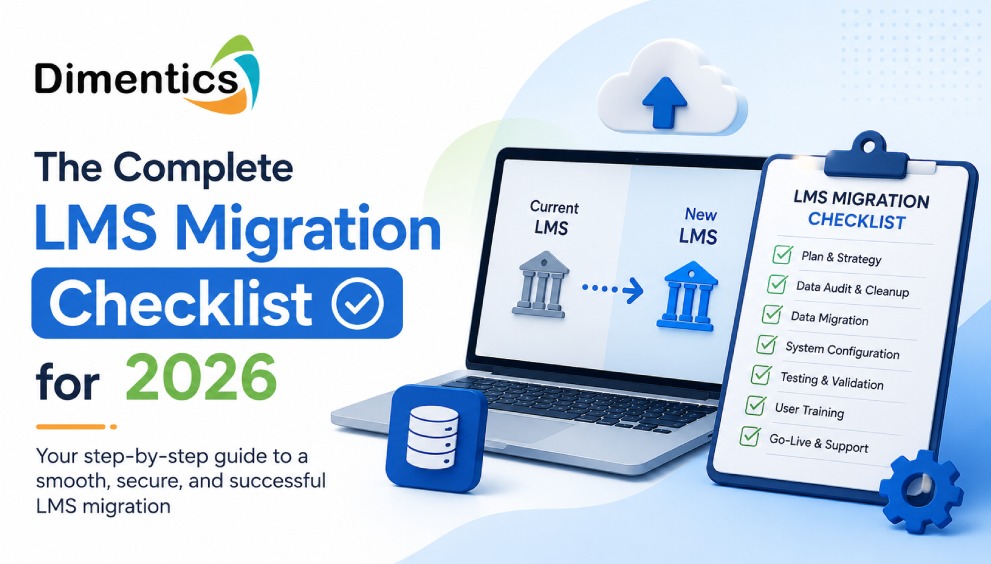
In 2026, businesses are rapidly upgrading their digital learning ecosystems to meet modern workforce demands. Whether you are moving from a legacy platform or upgrading to an AI-powered learning environment, having a structured LMS Migration strategy is essential for success.
A Learning Management System migration is more than simply transferring data from one platform to another. It involves protecting learner records, maintaining course integrity, improving user experience, and ensuring business continuity during the transition.
Organizations that fail to plan properly often face data loss, employee confusion, compliance issues, and costly downtime. That’s why following a complete migration checklist has become critical for training providers, educational institutions, and corporate learning teams.
In this guide, we’ll walk through the complete LMS migration checklist for 2026 and explain how companies like Dimentics help businesses achieve seamless transitions with minimal disruption.
What Is LMS Migration?
LMS Migration refers to the process of moving learning content, user data, integrations, certifications, and workflows from one Learning Management System to another.
Businesses usually migrate their LMS because of:
- Outdated platform limitations
- Poor user experience
- Lack of AI integration
- Scalability challenges
- Security concerns
- High maintenance costs
- Need for better analytics and reporting
With AI-driven learning becoming mainstream in 2026, organizations are increasingly moving toward modern cloud-based LMS platforms that support automation, personalization, and advanced analytics.
Why LMS Migration Matters in 2026
The learning technology landscape has changed significantly over the last few years. Companies now expect their LMS to support:
- AI-powered personalized learning
- Mobile-first learning experiences
- Advanced reporting dashboards
- Seamless HR and CRM integrations
- Real-time collaboration tools
- Gamification and microlearning
- Enhanced cybersecurity compliance
An outdated LMS can slow down employee training, reduce engagement, and negatively impact productivity.
This is where a strategic LMS migration becomes valuable. A properly executed migration helps organizations modernize their training systems without losing important learning data.
The Complete LMS Migration Checklist for 2026
1. Define Your Migration Goals
Before starting the migration process, identify the purpose behind the move.
Ask questions like:
- Why are we migrating?
- What problems are we trying to solve?
- Which features are missing in the current LMS?
- What business outcomes do we expect?
Clear goals help create a focused migration roadmap.
Common objectives include:
- Improving learner engagement
- Reducing operational costs
- Enabling AI-driven learning
- Enhancing reporting capabilities
- Simplifying administration
2. Audit Your Existing LMS
Conduct a detailed audit of your current LMS before migrating anything.
Review:
- Active users
- Inactive learner accounts
- Courses and modules
- SCORM/xAPI content
- Certifications
- Assessments
- Integrations
- Reports and analytics
This step helps identify outdated or unnecessary data that should not be transferred to the new platform.
A clean migration improves system performance and reduces clutter.
3. Choose the Right LMS Platform
Not every LMS platform fits every business model.
When selecting a new system, evaluate:
- Scalability
- AI capabilities
- Integration flexibility
- Mobile responsiveness
- User experience
- Security compliance
- Automation tools
- Reporting functionality
In 2026, AI-enabled LMS platforms are becoming the preferred choice because they improve learning personalization and automate repetitive administrative tasks.
Companies like Dimentics help organizations evaluate the best-fit LMS platforms based on industry requirements, workforce size, and future scalability.
4. Create a Data Migration Strategy
Data is one of the most critical aspects of LMS migration.
Develop a structured migration plan for:
- User profiles
- Learning history
- Course completion records
- Certificates
- Training transcripts
- Quiz results
- Compliance records
Ensure all sensitive learner data remains protected during the transfer process.
Data mapping is especially important because different LMS platforms may use different database structures.
5. Backup Everything
Before initiating migration, create a complete backup of your existing LMS environment.
Your backup should include:
- Course files
- User databases
- Reports
- Configuration settings
- Certificates
- Media assets
This ensures recovery options are available if unexpected issues occur during migration.
Skipping backups is one of the biggest LMS migration mistakes organizations make.
6. Check Compatibility Issues
Compatibility testing is essential during LMS migration.
Verify compatibility for:
- SCORM packages
- xAPI content
- Multimedia files
- Third-party plugins
- HRMS integrations
- CRM integrations
- Single Sign-On systems
Incompatible learning content can break functionality after migration.
Testing early helps avoid delays and unexpected technical issues.
7. Migrate Content in Phases
Avoid migrating everything at once.
Instead, move content in stages:
Phase 1:
Core learner data
Phase 2:
Active courses and training modules
Phase 3:
Archived courses and historical records
A phased migration reduces operational risks and allows teams to identify issues before full deployment.
8. Test the New LMS Thoroughly
Testing is one of the most important parts of the LMS migration process.
Perform:
- Functional testing
- User acceptance testing
- Security testing
- Integration testing
- Mobile testing
- Performance testing
Make sure:
- Courses load correctly
- Reports generate properly
- Learner progress is accurate
- Integrations work smoothly
A poor testing process can lead to major disruptions after launch.
9. Train Your Team
Even the best LMS platform can fail if users are not trained properly.
Provide onboarding sessions for:
- Administrators
- Trainers
- Employees
- Managers
Offer:
- Video tutorials
- Knowledge base articles
- Live training sessions
- FAQ documentation
User adoption becomes easier when employees understand the new system quickly.
10. Monitor Post-Migration Performance
The work does not end after launch.
Monitor:
- System performance
- User engagement
- Error logs
- Reporting accuracy
- Learner feedback
Regular monitoring helps identify issues early and ensures the LMS performs efficiently over time.
Common LMS Migration Challenges
Organizations often face several migration challenges, including:
Data Loss
Improper backups can lead to missing learner records.
Downtime
Poor planning can interrupt employee training schedules.
Integration Failures
Third-party tools may stop functioning after migration.
User Resistance
Employees may struggle to adapt to a new interface.
Compliance Risks
Training records may become incomplete during migration.
Working with experienced LMS migration experts significantly reduces these risks.
How Dimentics Supports LMS Migration
Dimentics helps organizations streamline complex LMS migration projects with a structured and strategic approach.
Their team focuses on:
- Migration planning
- Data mapping
- Platform integration
- Security compliance
- User onboarding
- Post-migration optimization
By combining technical expertise with modern learning strategies, Dimentics helps businesses transition to future-ready LMS platforms efficiently and securely.
Future Trends in LMS Migration for 2026
The future of LMS migration is being shaped by AI and automation.
Key trends include:
- AI-powered learner personalization
- Automated content tagging
- Predictive learning analytics
- Cloud-native LMS platforms
- Low-code integrations
- Enhanced cybersecurity frameworks
Organizations investing in advanced LMS ecosystems today will be better positioned for workforce development in the future.
Final Thoughts
A successful LMS migration requires careful planning, structured execution, and ongoing optimization. Businesses that follow a comprehensive migration checklist can avoid costly mistakes and create a smooth transition for learners and administrators.
As learning technology continues evolving in 2026, organizations need scalable, AI-ready LMS platforms that improve engagement and training efficiency.
Whether you are upgrading from a legacy system or adopting a modern cloud-based solution, a strategic LMS Migration approach ensures long-term success.
With expert guidance from companies like Dimentics, organizations can confidently modernize their learning infrastructure while maintaining data integrity, compliance, and operational continuity.
Latest Blog
- Curriculum Mapping Services for U.S. Schools and Educational Publishers
- How to Reduce Corporate Training Costs Without Compromising Learning Quality
- How to Create Interactive Digital Textbooks for K–12 Publishers in the USA
- Scenario-Based Learning Development Services for Corporate Training
- How eLearning Solutions Help Businesses Improve Employee Training and Performance