
K-12 Education Content Development in US: A Complete Guide for Modern Learning
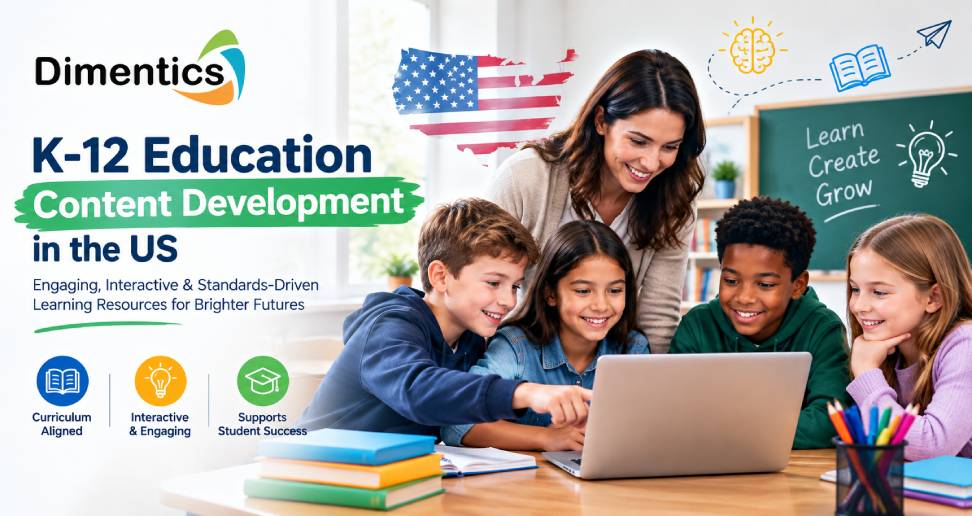
K-12 education in the United States is changing rapidly as schools, districts, publishers, and education businesses adopt digital learning environments. Students increasingly interact with lessons through learning management systems, interactive courses, digital textbooks, videos, assessments, and other technology-driven resources. As a result, K-12 Education Content Development in US has become an important part of creating effective, accessible, and engaging learning experiences.
Developing educational content for K-12 learners requires more than simply converting textbooks into digital formats. Content needs to align with curriculum requirements, support different learning needs, work across digital platforms, and provide students with meaningful opportunities to understand and apply concepts.
What Is K-12 Education Content Development?
K-12 education content development refers to the process of designing, creating, organizing, and improving educational materials for students from kindergarten through Grade 12.
Depending on the educational objective, content may include:
- Digital lessons and learning modules
- Interactive eLearning courses
- Educational videos and animations
- Digital textbooks and learning resources
- Quizzes and assessments
- Teacher resources and instructional guides
- Curriculum-based activities
- Accessibility-ready educational materials
- Standards-aligned learning content
Professional content development combines instructional design, subject expertise, technology, and curriculum knowledge to create resources that support both teachers and students.
Why K-12 Content Development Matters in the US
The U.S. education system includes different state standards, district requirements, instructional approaches, and student populations. Educational organizations therefore need content that is flexible enough to meet different classroom requirements.
Well-developed content can help organizations:
Improve Student Engagement
Students are more likely to interact with content when lessons include multimedia, activities, practical examples, and interactive elements. Instead of relying exclusively on long blocks of text, digital learning can combine visuals, narration, quizzes, simulations, and interactive exercises.
Support Different Learning Needs
Students have different abilities, backgrounds, learning preferences, and levels of prior knowledge. Content developers need to consider these differences during the design process.
This is where Learning Accessibility Services can become particularly valuable. Accessibility-focused development helps educational organizations create digital learning experiences that can be used by a broader range of students.
Create Consistent Learning Experiences
Schools and education companies may distribute content across multiple classrooms, schools, or digital platforms. A structured content development process can help maintain consistency in terminology, instructional design, visual presentation, and learning objectives.
Strengthen Curriculum Alignment
Educational content should support clearly defined learning objectives and curriculum expectations. Content developers can map lessons and activities to appropriate educational standards while maintaining a logical learning progression.
Key Components of Effective K-12 Education Content Development
Successful content development involves several interconnected stages.
1. Understanding the Target Learners
The first step is identifying the students who will use the content. Kindergarten learners require a very different instructional approach from high school students.
Developers should consider:
- Age and grade level
- Reading ability
- Subject knowledge
- Learning objectives
- Digital experience
- Accessibility requirements
- Cultural and classroom context
Understanding the audience allows designers to select an appropriate tone, complexity, format, and level of interaction.
2. Defining Learning Objectives
Every lesson should have a clear purpose. Learning objectives explain what students should know or be able to do after completing a lesson or course.
For example, a science lesson may require students to identify the stages of a particular process, while a mathematics lesson may focus on applying a specific formula to solve problems.
Clear objectives make it easier to create relevant instructional content and assessments.
3. Designing Engaging Digital Content
Modern K-12 content can incorporate a variety of formats, including interactive presentations, animations, videos, scenarios, quizzes, and simulations.
Tools such as Articulate Storyline and Rise 360 can be used to create structured digital learning experiences. Organizations looking to modernize existing educational resources can also explore Custom eLearning Development to create courses based on specific instructional and technology requirements.
The objective should not be to add technology simply for visual appeal. Each interactive element should contribute to the learning goal.
Accessibility in K-12 Digital Education
Accessibility is an increasingly important consideration when creating digital educational resources.
Students may access learning materials using keyboards, screen readers, captions, alternative text, or other assistive technologies. If digital content is not designed with accessibility in mind, some students may face unnecessary barriers.
Organizations can incorporate Accessibility Compliance practices into the content development process rather than attempting to fix accessibility problems after a course has already been created.
Accessibility considerations may include:
- Keyboard navigation
- Appropriate color contrast
- Alternative text for meaningful images
- Captions and transcripts
- Logical heading structures
- Accessible forms and assessments
- Screen-reader compatibility
- Clear and consistent navigation
Following accessibility principles can make digital learning more usable for a wider audience.
The Role of WCAG in K-12 Content
The Web Content Accessibility Guidelines (WCAG) provide widely used recommendations for making digital content more accessible.
For educational organizations, accessibility should be considered across the entire learning experience. This includes the course interface, instructional materials, multimedia, assessments, downloadable resources, and interactive activities.
Organizations that already have digital learning materials may also benefit from WCAG Remediation Services to identify and address accessibility issues within existing content.
Remediation can be especially useful when an organization has a large collection of legacy courses that were created before accessibility requirements were fully integrated into its development process.
Developing Content From Existing Materials
Schools, publishers, and education companies often already have valuable instructional materials. These may include PowerPoint presentations, PDFs, textbooks, instructor notes, lesson plans, or recorded lectures.
Rather than rebuilding everything from scratch, existing materials can be transformed into structured digital learning experiences.
For example, a PowerPoint-based lesson can be converted into an interactive course with:
- Learning objectives
- Narration
- Knowledge checks
- Interactive activities
- Assessments
- Accessible navigation
- Downloadable resources
A PowerPoint to Articulate Rise 360 conversion workflow can help organizations transform static presentations into responsive digital learning content.
Quality Assurance and Content Testing
Content development does not end when the course is published. Testing is essential to ensure that the final product works as intended.
Quality assurance may include checking:
- Spelling and grammar
- Links and navigation
- Interactive elements
- Assessment functionality
- Mobile responsiveness
- Audio and video
- Accessibility features
- Visual consistency
- Learning objectives and assessments
Testing across different devices and learning environments can help identify problems before students encounter them.
Choosing the Right K-12 Content Development Partner
Organizations looking for K-12 Education Content Development in US should evaluate potential development partners based on their experience with instructional design, accessibility, technology, curriculum requirements, and digital learning.
A capable partner should be able to understand the educational objective rather than simply produce visually attractive content. They should also have processes for content planning, development, accessibility testing, quality assurance, and ongoing improvement.
For education organizations that require curriculum-focused digital learning, combining instructional design with accessibility and technology expertise can create a more complete development process.
Conclusion
K-12 Education Content Development in US plays an important role in modernizing how students learn and interact with educational materials. Effective content should be engaging, curriculum-focused, accessible, technically reliable, and appropriate for the intended grade level.
From developing new interactive courses to transforming existing materials, organizations can use instructional design and digital learning technologies to create more effective educational experiences. Integrating accessibility from the beginning and applying appropriate quality assurance processes can further improve the usability and reach of K-12 learning content.
For schools, publishers, education companies, and training organizations, investing in professionally developed digital content can provide a structured foundation for delivering meaningful learning experiences in today’s increasingly digital education environment.
Latest Blog
- Curriculum Mapping Services for U.S. Schools and Educational Publishers
- How to Reduce Corporate Training Costs Without Compromising Learning Quality
- How to Create Interactive Digital Textbooks for K–12 Publishers in the USA
- Scenario-Based Learning Development Services for Corporate Training
- How eLearning Solutions Help Businesses Improve Employee Training and Performance