
Designing Smarter Assessments: Trends in Modern Assessment Development Services
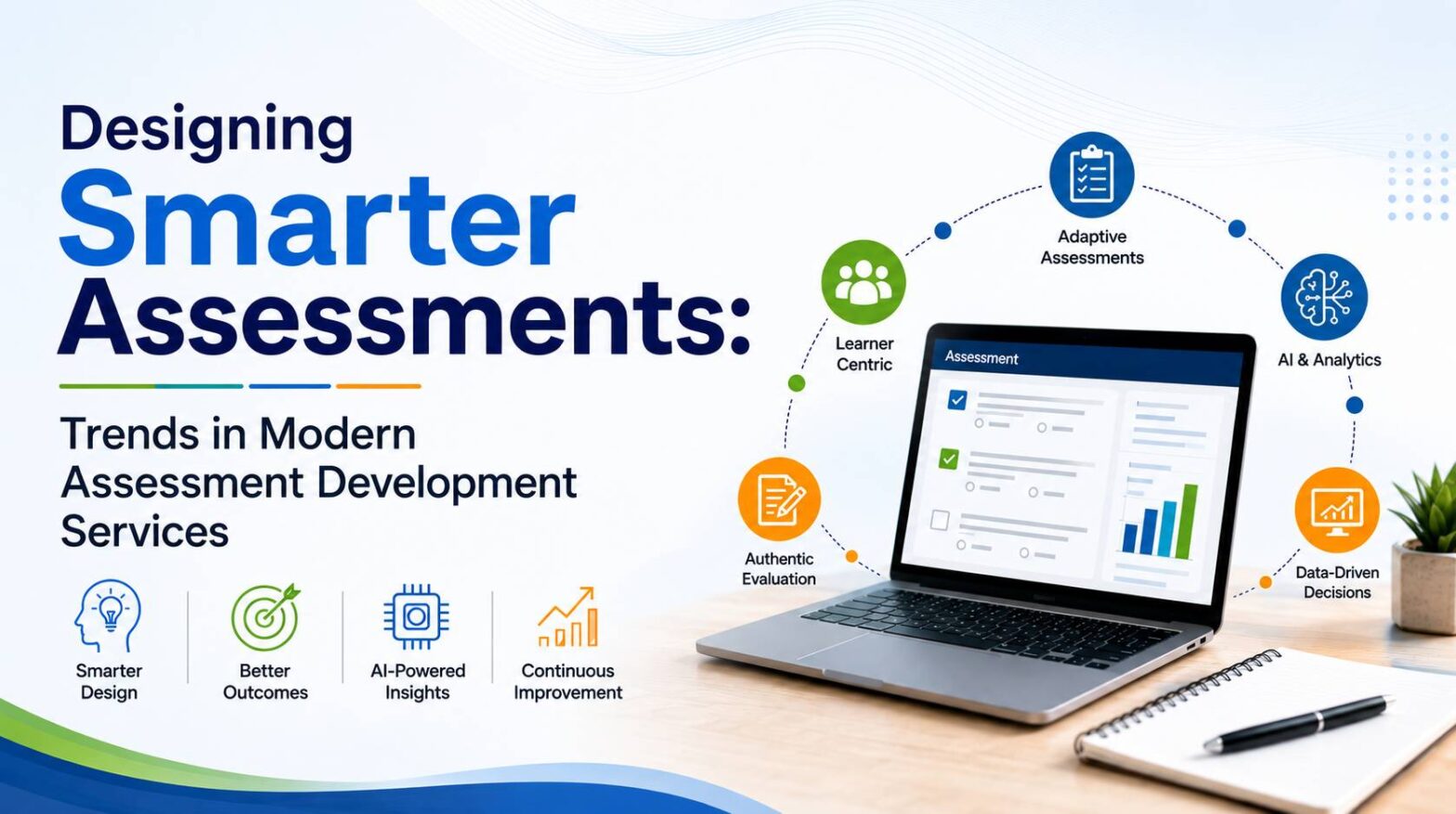
In today’s rapidly evolving learning ecosystem, assessments are no longer limited to traditional pen-and-paper tests or static multiple-choice exams. Organizations across education, corporate training, and certification sectors are increasingly investing in Assessment Development Services to create smarter, more reliable, and learner-focused evaluation systems. These services help institutions design assessments that measure not only knowledge retention but also critical thinking, problem-solving, adaptability, and real-world application.
As digital learning expands and skill-based hiring becomes more common, the role of modern assessments has transformed significantly. Businesses, universities, EdTech companies, and certification bodies now require robust frameworks that align with curriculum goals, industry standards, and learner expectations. This is where professional assessment development becomes essential.
What Are Assessment Development Services?
Assessment Development Services refer to the end-to-end process of designing, creating, validating, and maintaining assessments tailored to specific learning or evaluation objectives. These services typically include:
- Test blueprint creation
- Question bank development
- Item writing and review
- Psychometric analysis
- Adaptive test design
- Performance-based assessments
- Accessibility and compliance checks
The objective is to ensure assessments are valid, reliable, scalable, and aligned with intended outcomes. Whether it is a K-12 school exam, university entrance test, employee certification, or corporate training evaluation, professional development ensures accuracy and fairness.
Modern service providers also integrate analytics and AI tools to improve item quality, identify learning gaps, and personalize assessment experiences.
Why Organizations Need Modern Assessment Development
Traditional assessments often fail to capture practical competencies. Memorization-heavy exams may evaluate recall but overlook analytical ability, communication, and applied learning. Modern organizations need assessments that provide actionable insights.
Here’s why Assessment Development Services have become critical:
1. Alignment with Learning Outcomes
Well-designed assessments directly map questions to competencies, curriculum objectives, or skill frameworks. This ensures every test item serves a purpose.
For example, if a course aims to develop analytical thinking, assessments should include case studies, simulations, or scenario-based questions instead of only fact-based quizzes.
2. Improved Reliability and Fairness
Professionally developed assessments undergo rigorous validation and review. This reduces ambiguity, bias, and inconsistencies in scoring.
Reliable assessments ensure all learners or candidates are evaluated under standardized conditions, making results more trustworthy.
3. Scalability Across Platforms
With online learning becoming mainstream, institutions need assessments that work seamlessly across web and mobile devices.
Modern development services build scalable digital assessments that support:
- Remote proctoring
- Automated grading
- Instant feedback
- LMS integration
This improves efficiency while maintaining quality.
4. Data-Driven Decision Making
Assessments are no longer just grading tools. They generate valuable performance data.
Organizations can use insights from assessment analytics to:
- Identify skill gaps
- Personalize learning paths
- Improve curriculum effectiveness
- Support hiring or certification decisions
Key Trends Shaping Modern Assessment Development Services
The assessment landscape is changing quickly. Here are the most impactful trends driving innovation.
1. AI-Powered Assessment Design
Artificial intelligence is streamlining assessment creation by automating repetitive tasks such as item generation, difficulty tagging, and distractor analysis.
AI tools can:
- Suggest question variations
- Detect duplicate items
- Analyze question quality
- Predict item difficulty
This accelerates development cycles while maintaining consistency.
However, human subject matter experts still remain essential for content review, contextual accuracy, and pedagogical quality.
2. Adaptive Testing Models
Adaptive assessments adjust question difficulty in real time based on learner responses.
Benefits include:
- Personalized testing experience
- More accurate skill measurement
- Reduced test fatigue
- Shorter assessment duration
Adaptive testing is particularly effective in certification programs, language testing, and diagnostic evaluations.
As organizations prioritize learner-centric models, adaptive frameworks are becoming a major focus within Assessment Development Services.
3. Competency-Based Assessments
Employers increasingly value demonstrable skills over rote knowledge. This shift has accelerated competency-based assessments.
Examples include:
- Coding challenges
- Case simulations
- Portfolio reviews
- Scenario analysis
- Interactive tasks
Instead of asking what learners know, competency-based models evaluate what they can actually do.
This trend is especially prominent in workforce training, professional certification, and higher education.
4. Accessibility and Inclusive Assessment Design
Inclusive assessment design ensures equitable experiences for diverse learners, including those with disabilities or language barriers.
Modern providers prioritize:
- Screen reader compatibility
- Keyboard navigation
- Alt-text support
- Flexible timing options
- Clear language standards
Accessibility is no longer optional. It is a core requirement in global assessment ecosystems.
5. Gamified Assessments
Gamification introduces interactive elements such as points, badges, timers, levels, and storytelling.
Benefits include:
- Higher learner engagement
- Reduced anxiety
- Improved completion rates
- Better motivation
Gamified assessments are increasingly used in K-12 learning, onboarding programs, and soft skill evaluations.
Role of Education Content Development Services in Assessment Success
Assessments cannot function effectively in isolation. They must align with high-quality learning materials and curriculum structures.
This is where Education Content Development Services play a crucial role.
These services support assessment quality by creating:
- Curriculum-aligned instructional content
- Digital learning modules
- Practice materials
- Instructor guides
- Interactive learning resources
When assessment and content teams collaborate, organizations achieve stronger alignment between teaching, practice, and evaluation.
For example, if learners study interactive modules built through Education Content Development Services, assessments can mirror those formats through simulations, drag-and-drop tasks, or branching scenarios.
This creates a cohesive learner journey.
How to Choose the Right Assessment Development Partner
Selecting the right partner is essential for long-term success.
Look for providers with:
Domain Expertise
Choose teams with subject matter experts across education, certification, or workforce training.
Psychometric Capabilities
Strong statistical analysis ensures validity, reliability, and defensible outcomes.
Technology Integration
The provider should support LMS compatibility, AI tools, analytics dashboards, and secure delivery.
Customization
Avoid one-size-fits-all templates. Effective assessments should reflect your goals, audience, and context.
Quality Assurance
Robust review cycles reduce content errors, bias, and compliance issues.
The Future of Assessment Development
The future of assessments is smarter, faster, and more personalized.
Emerging innovations likely to shape the industry include:
- AI-generated personalized assessments
- Real-time skill diagnostics
- Voice and video-based evaluation
- Immersive AR/VR assessments
- Blockchain credential verification
As learning models evolve, organizations must rethink how they measure success.
Professional Assessment Development Services will continue to drive this transformation by helping institutions build accurate, engaging, and scalable evaluation systems.
Conclusion
Assessments are no longer just end-of-course checkpoints. They are strategic tools for measuring growth, validating skills, and improving learning outcomes.
Organizations investing in modern Assessment Development Services gain a competitive advantage through smarter evaluations, better learner insights, and stronger decision-making frameworks.
When combined with effective Education Content Development Services, assessments become part of a connected ecosystem that supports learning, engagement, and measurable success.
As education and workforce demands continue to shift, smarter assessments will define the future of skill validation and performance measurement.
Latest Blog
- Curriculum Alignment vs. Standards Alignment: Which Does Your Education Business Need?
- How to Choose the Right eLearning Content Development Company for Your Organization
- A Complete Guide to Standards Correlation for K–12 Publishers
- How to Plan a Successful Custom eLearning Project
- How AI Is Transforming Standards Alignment