
How to Develop an eLearning Course Step-by-Step: A Complete Guide
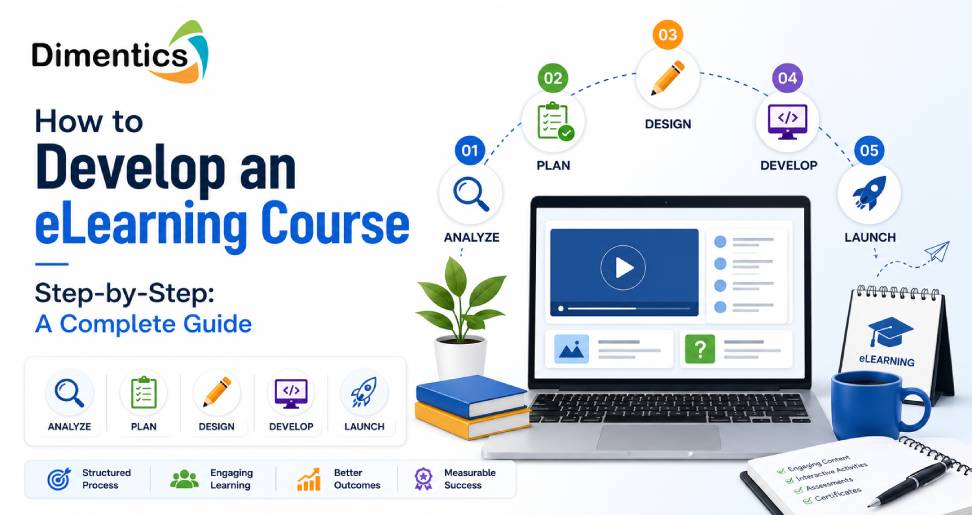
The demand for eLearning has grown rapidly as organizations, educational institutions, and training providers embrace digital learning. Whether you’re creating an employee onboarding program, compliance training, academic content, or customer education, a well-designed eLearning course can significantly improve knowledge retention, learner engagement, and training outcomes.
However, developing an effective eLearning course involves much more than uploading slides or recording videos. It requires a strategic approach that combines instructional design, engaging content, interactive learning experiences, and the right technology.
In this guide, we’ll walk you through the complete step-by-step process of developing an eLearning course while highlighting how partnering with an experienced learning solutions provider like Dimentics can simplify the journey.
Step 1: Identify Learning Goals
Every successful eLearning course begins with clearly defined learning objectives.
Ask yourself:
- Who is the target audience?
- What skills or knowledge should learners gain?
- What business or educational problem will the course solve?
- How will success be measured?
Learning objectives should be specific, measurable, achievable, relevant, and time-bound (SMART). Well-defined goals ensure every lesson, activity, and assessment supports the desired learning outcomes.
Professional instructional designers use proven learning frameworks to align course objectives with learner needs and organizational goals. Companies like Dimentics specialize in creating outcome-driven learning strategies that maximize learner success.
Step 2: Understand Your Learners
A course designed for university students differs significantly from one developed for corporate employees or technical professionals.
Before creating content, analyze your learners:
- Existing knowledge level
- Job roles
- Learning preferences
- Technical proficiency
- Language requirements
- Accessibility needs
Understanding your audience helps determine the appropriate instructional methods, course complexity, and level of interactivity.
For organizations serving global audiences, multilingual and accessible learning experiences are equally important. Dimentics develops learner-centric content that supports diverse audiences while following accessibility best practices.
Step 3: Design the Course Structure
Once objectives are clear, organize the content into logical modules.
A typical course structure includes:
- Introduction
- Learning objectives
- Core lessons
- Interactive activities
- Knowledge checks
- Final assessment
- Course summary
Breaking large topics into smaller modules improves learner engagement and reduces cognitive overload.
Many organizations also adopt microlearning by delivering short lessons that learners can complete in just a few minutes. This approach improves completion rates while making learning more flexible.
Step 4: Develop High-Quality Content
Content remains the foundation of every successful eLearning course.
Depending on your audience, content may include:
- Written lessons
- Interactive scenarios
- Infographics
- Videos
- Case studies
- Simulations
- Real-world examples
Instead of overwhelming learners with information, focus on clarity, relevance, and practical application.
Expert content developers and subject matter experts ensure information remains accurate, engaging, and aligned with learning objectives. Dimentics offers end-to-end content development, instructional design, technical writing, curriculum engineering, and assessment development to create impactful learning experiences.
Step 5: Add Interactive Learning Elements
Modern learners expect more than static presentations.
Interactive elements improve engagement and increase knowledge retention.
Popular interactive features include:
- Drag-and-drop exercises
- Branching scenarios
- Gamification
- Interactive videos
- Simulations
- Quizzes
- Clickable graphics
- Discussion activities
These features encourage active participation rather than passive learning.
Dimentics designs engaging Learning Experience Design (LXD) solutions that incorporate gamification, interactive media, video-first learning, and immersive digital content to keep learners motivated.
Step 6: Choose the Right eLearning Authoring Tools
Selecting the appropriate technology is essential.
Popular authoring tools include:
- Articulate Storyline
- Adobe Captivate
- iSpring Suite
- Lectora
- Elucidat
- Rise 360
The right platform depends on your learning objectives, budget, technical requirements, and delivery format.
If your organization requires custom Learning Management System (LMS) integration, mobile learning, or SCORM/xAPI compatibility, working with an experienced development partner can significantly reduce implementation time.
Dimentics provides LMS development, platform integration, mobile learning solutions, and custom eLearning development tailored to organizational needs.
Step 7: Design Effective Assessments
Assessments help measure whether learners have achieved the intended outcomes.
Include different assessment formats such as:
- Multiple-choice questions
- Scenario-based questions
- Matching exercises
- Simulations
- Practical assignments
- Interactive quizzes
Frequent knowledge checks also reinforce learning and identify areas requiring additional support.
Dimentics develops data-driven assessments and question banks that accurately evaluate learner progress and real-world performance.
Step 8: Ensure Accessibility and Mobile Compatibility
Today’s learners access courses across multiple devices.
Your course should work seamlessly on:
- Desktop computers
- Tablets
- Smartphones
Additionally, accessibility should never be overlooked.
Follow standards such as:
- Closed captions
- Screen reader compatibility
- Keyboard navigation
- Color contrast compliance
- Alternative image text
Inclusive learning experiences allow everyone to participate effectively.
Dimentics provides accessibility design services and develops WCAG-compliant learning content that supports inclusive education and workforce training.
Step 9: Test Before Launch
Before publishing your course, conduct thorough quality assurance testing.
Review:
- Navigation
- Multimedia performance
- Mobile responsiveness
- Assessment functionality
- SCORM/LMS compatibility
- Grammar and spelling
- User experience
Pilot testing with a small learner group provides valuable feedback for final improvements.
Professional quality assurance ensures a polished learner experience while reducing technical issues after launch.
Step 10: Launch, Monitor, and Improve
Publishing your course is only the beginning.
Use LMS analytics to monitor:
- Course completion rates
- Assessment scores
- Learner engagement
- Time spent per module
- Feedback surveys
Continuous improvement helps keep content relevant and aligned with changing learner needs.
Organizations that regularly update their digital learning content achieve better long-term learning outcomes and stronger business performance.
Why Partner with Dimentics for eLearning Development?
Developing an effective eLearning course requires expertise across multiple disciplines, including instructional design, multimedia production, content development, learning technology, accessibility, and project management.
Rather than managing multiple vendors, organizations increasingly partner with end-to-end learning solution providers.
Dimentics delivers comprehensive digital learning services that include:
- Custom eLearning development
- Instructional design
- Curriculum engineering
- Interactive media development
- Learning Experience Design (LXD)
- Assessment development
- Video-based learning
- AI-powered learning solutions
- LMS development and integration
- Digital content transformation
- Accessibility compliance
- Managed learning services
With experience supporting enterprises, universities, publishers, EdTech companies, and corporate learning teams, Dimentics helps organizations build scalable, engaging, and measurable learning experiences from concept to deployment.
Final Thoughts
Creating an impactful eLearning course is a structured process that begins with understanding learner needs and ends with continuous improvement based on measurable results. Every stage—from planning and instructional design to multimedia development, assessments, accessibility, and technology integration—plays a vital role in delivering meaningful learning experiences.
If your organization is looking to develop high-quality digital learning solutions without the complexity of managing every stage internally, Dimentics offers the expertise, technology, and end-to-end support needed to bring your vision to life. Their comprehensive approach ensures your eLearning programs are engaging, scalable, accessible, and aligned with your business or educational objectives, helping learners achieve lasting success while driving measurable organizational impact.
Latest Blog
- AI and Digital Skills Training in the US: Preparing the Workforce for a Digital Future
- Education Content Development Services in US: Building Engaging, Effective Learning Experiences
- Curriculum Alignment vs. Standards Alignment: Which Does Your Education Business Need?
- How to Choose the Right eLearning Content Development Company for Your Organization
- A Complete Guide to Standards Correlation for K–12 Publishers