
Training Modernization Services in the US: Transforming Legacy Learning for the Digital Age
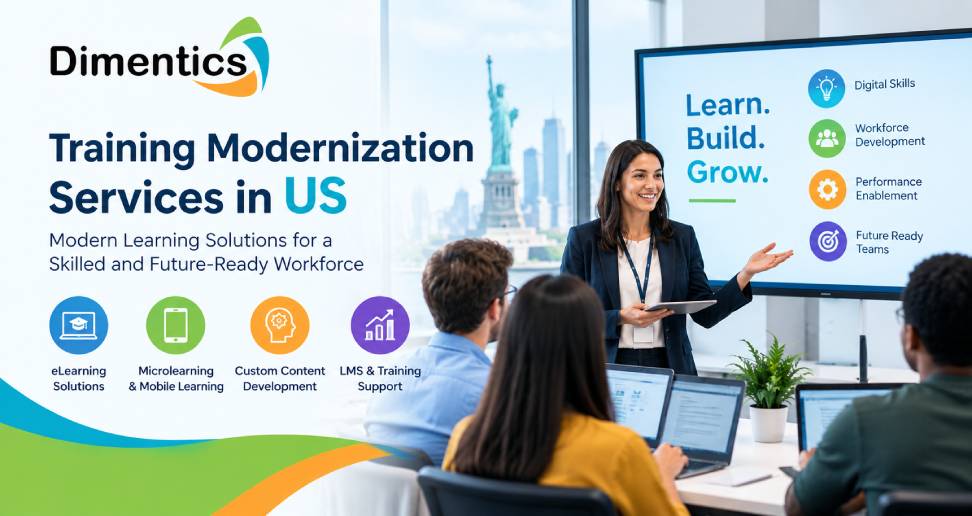
Organizations across the United States are investing heavily in digital transformation, artificial intelligence, cloud technology, and new workplace systems. However, technology modernization is only successful when employees, educators, and learners can effectively use the new tools and processes. This makes modernizing training content and learning programs an important part of digital transformation.
Traditional training materials such as outdated PowerPoint presentations, classroom manuals, legacy eLearning courses, PDFs, and older LMS content can become difficult to maintain, update, access, and scale. Training Modernization Services help organizations transform these resources into engaging, accessible, technology-ready learning experiences.
What Are Training Modernization Services?
Training modernization is the process of evaluating existing training programs and transforming outdated learning content into modern digital experiences.
Rather than simply converting an old course into a new file format, modernization looks at the entire learning experience. This can include instructional design, content restructuring, multimedia, accessibility, assessment, learning technology, mobile responsiveness, and learner engagement.
Modernization may involve:
- Converting legacy eLearning courses
- Updating outdated instructional content
- Transforming PowerPoint-based training into interactive courses
- Migrating courses to modern authoring tools
- Creating microlearning and mobile-friendly content
- Improving accessibility and usability
- Adding video, simulations, scenarios, and assessments
- Integrating learning content with modern LMS platforms
- Updating outdated assessments and learning activities
- Applying analytics and AI-supported learning approaches
The objective is to create learning that is easier to deliver, maintain, access, and update.
Why US Organizations Are Modernizing Training
The workplace is changing rapidly. New technologies, evolving job roles, regulatory requirements, and changing learner expectations are forcing organizations to rethink how training is delivered.
Modern learning strategies increasingly connect training with everyday work rather than treating education as a separate activity. Industry providers such as Deloitte and KPMG describe learning transformation as involving strategy, technology, content, operations, analytics, and learner experience.
For U.S. organizations, modernization can address several common challenges.
1. Outdated Training Content
Training material can become obsolete when software, policies, products, regulations, or business processes change.
A course created several years ago may still contain valuable instructional information but use outdated screenshots, terminology, examples, or technology. Modernization allows organizations to preserve useful knowledge while replacing obsolete elements.
2. Poor Learner Engagement
Long presentations and text-heavy courses can make learning less engaging.
Modern training can incorporate videos, interactive activities, simulations, branching scenarios, knowledge checks, and microlearning. These formats can make complex information easier to understand and apply.
3. Accessibility Requirements
Accessibility has become an increasingly important consideration for organizations serving employees, students, customers, and public institutions.
Modernized training should consider keyboard navigation, screen-reader compatibility, captions, alternative text, color contrast, accessible documents, and other accessibility requirements. Dimentics, for example, provides accessibility remediation for digital learning and publishing content based on WCAG requirements.
4. Legacy Technology
Organizations may have training libraries built using older authoring tools, obsolete formats, or platforms that no longer fit their technology ecosystem.
Modernization can migrate this content into current authoring environments and make it more compatible with contemporary LMS and digital learning platforms.
Dimentics specifically describes migration of legacy courses into current Storyline and Rise 360 environments while maintaining instructional intent and improving areas such as responsiveness and accessibility.
Key Components of Training Modernization
Effective modernization usually involves several interconnected areas rather than a single technical conversion.
Content Assessment and Audit
The first step is understanding what an organization already has.
A training audit can identify:
- Outdated courses
- Duplicate content
- Missing learning objectives
- Obsolete information
- Accessibility problems
- Poor learner experiences
- Courses that require frequent updates
- Content that can be retired or consolidated
This helps organizations prioritize modernization projects instead of attempting to rebuild everything at once.
Instructional Design
Modernization should improve the way information is taught, not simply change its visual appearance.
Instructional designers can restructure lessons around learning objectives, practical activities, scenarios, assessments, and real-world applications.
The result is a learning experience designed around what learners need to accomplish rather than simply what information needs to be presented.
eLearning Conversion
Legacy classroom or presentation-based materials can be transformed into digital learning experiences.
For example, a 60-slide PowerPoint presentation might become a structured eLearning course containing short lessons, animations, interactions, knowledge checks, and downloadable resources.
This can make training easier to consume across locations and devices.
Microlearning
Microlearning breaks larger subjects into smaller learning units.
Instead of requiring employees to complete an entire course in one sitting, organizations can provide short lessons focused on specific skills, procedures, or knowledge areas.
This approach can be particularly useful for onboarding, software training, compliance refreshers, product knowledge, and workplace procedures.
Video and Interactive Learning
Video, simulations, scenarios, and interactive activities can make training more practical.
For example, a customer-service course could use branching scenarios where learners select responses to different customer situations. A software training program could use demonstrations and guided simulations.
Dimentics lists video-based learning, gamified learning, microlearning, and blended learning among its digital learning capabilities.
The Role of AI in Training Modernization
Artificial intelligence is increasingly becoming part of modern learning ecosystems.
AI can support activities such as content analysis, personalization, knowledge discovery, content recommendations, and learning analytics. However, effective modernization still requires instructional strategy and human review.
Organizations should determine where AI provides practical value rather than adding AI features simply because they are available.
A modern learning ecosystem can combine AI with human instructional expertise, accessibility testing, learning analytics, and strong content governance.
Modernizing Learning Platforms
Training modernization is not limited to courses. The technology used to deliver learning can also require modernization.
Organizations may need to improve or replace:
- Legacy LMS platforms
- Learning portals
- Content repositories
- Learner dashboards
- Integrations
- Reporting systems
- Mobile learning experiences
Modern learning platforms can connect content, users, data, and systems into a more unified learning environment. Dimentics describes its learning platform development approach as supporting organizations that are launching new learning ecosystems or modernizing existing infrastructure.
Benefits of Training Modernization for US Organizations
A well-planned modernization program can provide several operational and learning benefits.
Better Learner Experience
Modern interfaces, shorter learning modules, multimedia, and interactive activities can create a more user-friendly learning experience.
Easier Content Maintenance
Modular digital content can be easier to update when policies, products, processes, or technology change.
Greater Accessibility
Accessibility can be incorporated into the development and remediation process rather than treated as an afterthought.
Scalable Training
Digital learning allows organizations to deliver consistent training across locations, departments, and learner groups.
Better Integration
Modernized content can be designed to work with contemporary LMS, LXP, and other learning technologies.
Improved Training Management
Digital learning ecosystems can provide organizations with greater visibility into course completion, learner activity, assessments, and other learning data.
Choosing a Training Modernization Partner
Organizations considering modernization should evaluate potential providers based on more than development capacity.
Important factors include:
Experience with legacy content: The provider should understand how to evaluate and transform older training materials.
Instructional design expertise: Modernization should improve learning effectiveness, not just visual presentation.
Accessibility capabilities: The provider should understand applicable accessibility standards and testing requirements.
Technology expertise: Experience with authoring tools, LMS platforms, integrations, and digital learning technologies is important.
Scalability: Large training libraries may require structured workflows, quality assurance, and project management.
Content governance: Organizations should have processes for maintaining and updating modernized content after launch.
Dimentics provides services across content development, instructional design, digital learning, corporate training, accessibility, learning technology, AI-enabled transformation, and managed learning services.
Conclusion
Training modernization is becoming an important part of digital transformation for organizations in the United States. Outdated training content, legacy technology, accessibility requirements, changing workforce skills, and evolving learner expectations are creating a need for more flexible and scalable learning experiences.
A successful modernization strategy goes beyond converting old files. It evaluates existing content, improves instructional design, introduces appropriate digital formats, addresses accessibility, modernizes technology, and creates a sustainable process for future updates.
For organizations with large libraries of legacy training materials, modernization can provide a structured path toward more accessible, engaging, and technology-ready learning. By combining instructional design, digital content transformation, modern learning platforms, and emerging technologies, organizations can build training ecosystems that are better prepared for the changing needs of the U.S. workforce.
Latest Blog
- VPAT vs. ACR: What U.S. Education and eLearning Organizations Need to Know
- Training Modernization Services in the US: Transforming Legacy Learning for the Digital Age
- AI and Digital Skills Training in the US: Preparing the Workforce for a Digital Future
- Education Content Development Services in US: Building Engaging, Effective Learning Experiences
- Curriculum Alignment vs. Standards Alignment: Which Does Your Education Business Need?