
How K-12 Publishers Can Achieve Curriculum Compliance in the US
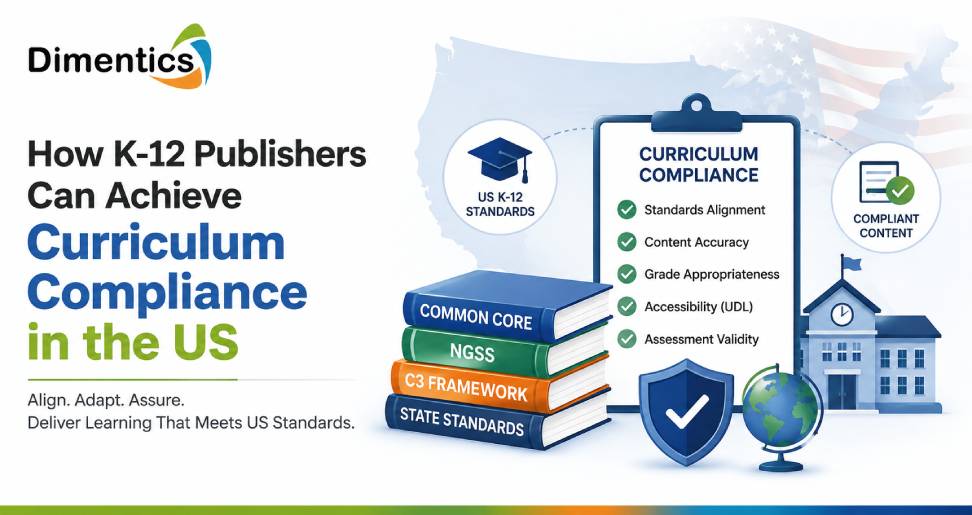
The education landscape in the United States continues to evolve as academic standards, state regulations, and digital learning requirements become more sophisticated. For K-12 publishers, creating high-quality educational content is no longer enough. Every textbook, digital course, assessment, and learning resource must align with curriculum standards to ensure schools, districts, and educators can confidently adopt them.
This is where curriculum compliance becomes a strategic priority. Publishers that successfully align their educational materials with national and state standards gain a competitive advantage while improving student learning outcomes.
In this guide, we’ll explore how K-12 publishers can achieve curriculum compliance in the US and why partnering with an experienced provider like Dimentics can simplify the entire process.
Understanding Curriculum Compliance
Curriculum compliance refers to the process of ensuring educational content meets the learning standards established by educational authorities. These standards define what students should know and be able to accomplish at each grade level.
In the United States, curriculum requirements vary significantly because education is largely managed at the state level. Publishers often need to align content with:
- State Academic Standards
- Common Core State Standards (where adopted)
- Next Generation Science Standards (NGSS)
- State-specific literacy and mathematics frameworks
- Social studies and history standards
- Accessibility requirements for digital learning materials
Meeting these requirements ensures instructional materials are suitable for classroom adoption and support educators in delivering standards-based instruction.
Why Curriculum Compliance Matters for K-12 Publishers
Educational institutions carefully evaluate learning materials before making purchasing decisions. If content does not clearly demonstrate standards alignment, publishers may lose valuable adoption opportunities.
Curriculum compliance provides several benefits:
- Increases acceptance by school districts
- Simplifies educator lesson planning
- Improves student learning consistency
- Enhances credibility with educational institutions
- Supports statewide textbook adoption programs
- Reduces revision costs during review cycles
Compliance also helps publishers maintain long-term relevance as educational standards continue evolving.
Challenges Publishers Commonly Face
Achieving curriculum compliance is often more complex than expected.
Multiple State Standards
Each state may have unique curriculum frameworks. A science curriculum approved in one state may require significant revisions before it meets another state’s requirements.
Frequent Standards Updates
Educational standards evolve regularly. Publishers must continuously monitor revisions and update instructional content accordingly.
Large Content Libraries
Many publishers manage thousands of learning assets, assessments, lesson plans, videos, and interactive modules. Reviewing every resource manually can become overwhelming.
Digital Learning Requirements
Modern educational resources include eLearning modules, LMS-compatible courses, interactive assessments, and multimedia content that also require curriculum mapping.
Accessibility Compliance
Digital educational materials should also meet accessibility guidelines to ensure all learners can effectively access instructional content.
Best Practices for Achieving Curriculum Compliance
1. Start With Curriculum Mapping
Before developing new instructional materials, publishers should identify the learning standards each lesson intends to address.
Curriculum mapping creates a structured relationship between educational objectives and instructional content. This process makes future reviews, revisions, and audits significantly easier.
2. Align Every Learning Objective
Each chapter, lesson, activity, and assessment should clearly demonstrate which educational standards it supports.
This detailed mapping improves transparency for educators and reviewers while simplifying textbook adoption processes.
3. Conduct Regular Content Reviews
Educational standards change over time.
Publishers should establish periodic review cycles to verify that instructional materials remain current and aligned with updated state requirements.
Routine reviews also identify outdated terminology, inaccurate references, or instructional gaps.
4. Integrate Accessibility from the Beginning
Curriculum compliance extends beyond academic standards.
Digital learning resources should incorporate accessibility best practices, including:
- Alternative text for images
- Keyboard navigation
- Screen reader compatibility
- Captioned multimedia
- Clear heading structures
- Accessible assessments
Building accessibility into content development reduces future remediation costs.
5. Use Professional Standards Alignment Support
Manual curriculum alignment is time-consuming and resource-intensive.
Many publishers choose specialized Standards Alignment Services to streamline curriculum mapping, identify content gaps, and produce comprehensive alignment documentation that meets educational review requirements.
Professional alignment experts can significantly reduce review time while improving accuracy across extensive content libraries.
The Role of Technology in Curriculum Compliance
Technology has transformed how publishers manage standards alignment.
Modern digital workflows allow organizations to:
- Track curriculum updates efficiently
- Manage large content repositories
- Map instructional objectives to multiple standards
- Generate alignment reports
- Review content collaboratively
- Maintain version control across educational assets
Automation reduces repetitive manual work while improving consistency throughout the publishing process.
How Dimentics Helps K-12 Publishers
Curriculum compliance requires educational expertise, instructional design knowledge, and a deep understanding of evolving academic standards.
Dimentics partners with K-12 publishers to simplify the alignment process while maintaining educational quality.
Its comprehensive services support publishers through every stage of content development and review, including:
- Curriculum mapping
- Standards alignment documentation
- Learning objective validation
- Instructional design review
- Digital learning optimization
- Accessibility compliance support
- Quality assurance for educational content
Whether publishers are creating new educational resources or updating existing learning materials, Dimentics delivers scalable solutions that reduce complexity and improve compliance outcomes.
By combining instructional expertise with modern educational technology, Dimentics enables publishers to produce learning content that meets state expectations while supporting teachers and students alike.
Choosing the Right Compliance Partner
Not all curriculum alignment providers offer the same level of educational expertise.
When selecting a partner, publishers should consider:
- Experience with K-12 curriculum standards
- Knowledge of multi-state educational frameworks
- Instructional design capabilities
- Accessibility expertise
- Quality assurance processes
- Scalable review workflows
- Ability to handle both print and digital content
An experienced partner helps minimize revision cycles while improving confidence during curriculum reviews.
Future Trends in Curriculum Compliance
The future of educational publishing will increasingly rely on data-driven curriculum alignment.
Emerging trends include:
- AI-assisted curriculum mapping
- Automated standards tracking
- Personalized learning pathways
- Competency-based education models
- Interactive digital textbooks
- Enhanced accessibility standards
- Continuous content improvement workflows
Publishers that embrace these innovations will be better positioned to meet evolving educational expectations and remain competitive in the rapidly changing K-12 market.
Conclusion
Achieving curriculum compliance in the US requires more than simply matching lessons to academic standards. It demands careful planning, continuous review, accessibility awareness, and structured curriculum alignment across every educational resource.
For K-12 publishers, investing in effective compliance processes improves adoption opportunities, strengthens educational quality, and builds trust with schools and districts.
Partnering with an experienced organization like Dimentics makes this process significantly more efficient. Through expert curriculum mapping, accessibility support, instructional design expertise, and professional Standards Alignment Services, publishers can confidently deliver high-quality educational materials that meet today’s evolving academic requirements while preparing for the future of digital learning.
Latest Blog
- Curriculum Mapping Services for U.S. Schools and Educational Publishers
- How to Reduce Corporate Training Costs Without Compromising Learning Quality
- How to Create Interactive Digital Textbooks for K–12 Publishers in the USA
- Scenario-Based Learning Development Services for Corporate Training
- How eLearning Solutions Help Businesses Improve Employee Training and Performance