
Benefits of Gamified Learning in K-12: Boosting Student Engagement and Retention
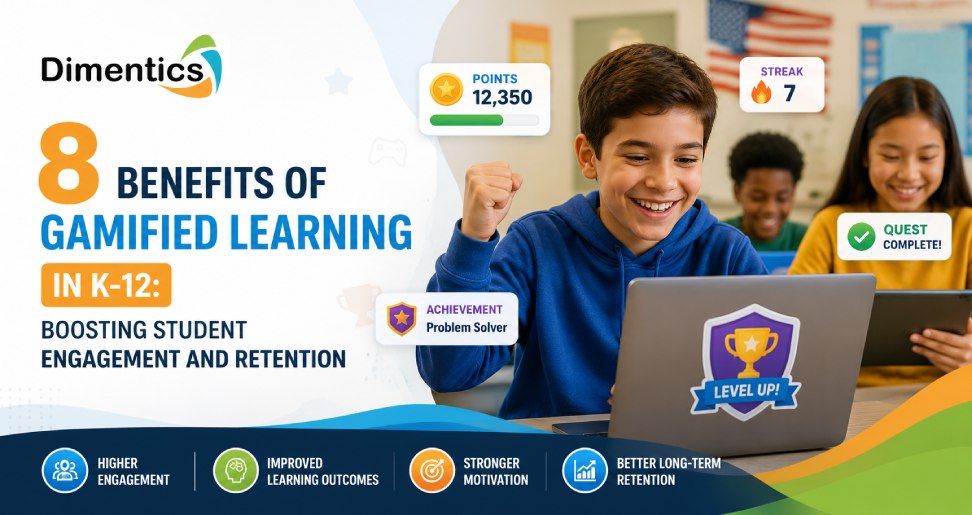
In today’s digital-first world, K-12 students are growing up surrounded by interactive technology, mobile apps, and video games. Traditional teaching methods alone are no longer enough to keep many students fully engaged in the classroom. This is why schools across the United States are increasingly turning toward gamified learning to improve student participation, motivation, and long-term knowledge retention.
Gamified learning uses game-like elements such as points, badges, challenges, leaderboards, rewards, and interactive activities to make education more engaging. Instead of relying only on lectures and worksheets, teachers create learning experiences that feel exciting and interactive. The result is a classroom environment where students are more motivated to participate and learn.
Research continues to show that gamification can positively impact academic performance and student engagement. Studies have found that gamified learning environments improve participation, motivation, and retention rates among students.
Why Gamified Learning Matters in K-12 Education
K-12 students often struggle with short attention spans, especially in an era dominated by social media and instant digital entertainment. Gamification helps bridge this gap by turning lessons into experiences students actually enjoy.
Whether it is solving math puzzles, earning rewards for reading achievements, or participating in science challenges, gamified learning creates a sense of accomplishment that encourages students to stay involved.
Unlike passive learning methods, gamification promotes active participation. Students are not simply memorizing information; they are interacting with the material in meaningful ways. This active involvement helps strengthen understanding and improve retention.
For schools in the United States, where student engagement has become a growing concern after years of remote and hybrid learning, gamification offers a practical solution that aligns with modern learning preferences.
Increased Student Engagement
One of the biggest benefits of gamified learning is higher student engagement. Many students lose interest in traditional classroom settings because lessons can feel repetitive or disconnected from their interests.
Gamification introduces excitement into the learning process. Features like instant feedback, progress tracking, and classroom competitions encourage students to stay focused and participate more consistently.
For example, a history lesson can become a mission-based adventure where students unlock achievements as they complete tasks. A spelling lesson may include timed challenges or team competitions that motivate students to practice more frequently.
Studies have shown that gamification significantly increases student participation and academic engagement.
Students are naturally drawn to environments where learning feels rewarding rather than stressful. This creates a more positive classroom atmosphere and helps teachers maintain student attention for longer periods.
Better Knowledge Retention
Student retention is one of the most important goals in education. It is not enough for students to memorize information for a test; they need to understand concepts and remember them long term.
Gamified learning improves retention because students are emotionally involved in the learning experience. Interactive activities, storytelling, and problem-solving tasks activate multiple areas of the brain, making lessons more memorable.
Research has found that gamification can improve learning outcomes and increase knowledge retention through active participation and repeated engagement.
When students enjoy the process of learning, they are more likely to revisit lessons voluntarily. Educational games often encourage repetition without making it feel like extra work, which strengthens memory and understanding over time.
For younger students especially, repetition through gameplay can reinforce foundational subjects like math, reading, and science in a highly effective way.
Encourages Personalized Learning
Every student learns differently. Some students excel through visual learning, while others perform better through hands-on activities or collaborative challenges.
Gamified learning platforms can support personalized education by adapting to individual student progress. Students can move at their own pace, revisit difficult topics, and receive customized feedback based on performance.
This personalized approach helps reduce frustration and builds confidence among students who may struggle in traditional classroom settings.
Educational technology companies such as Dimentics are helping schools create more adaptive and engaging digital learning experiences that align with the needs of modern K-12 classrooms. By combining interactive learning strategies with innovative educational tools, platforms like Dimentics can support schools looking to improve student participation and learning outcomes naturally.
Builds Motivation and Confidence
Motivation is one of the strongest predictors of student success. Gamified learning encourages students to stay motivated by rewarding effort and progress.
Simple features such as badges, achievement levels, and classroom rewards provide students with a sense of accomplishment. These small wins can significantly improve confidence, especially for students who may otherwise feel discouraged academically.
Unlike traditional grading systems that focus only on final results, gamification recognizes consistent effort and incremental improvement. This helps students develop a growth mindset and encourages them to keep trying even when subjects become challenging.
Research on K-12 gamification has shown positive effects on student motivation across various grade levels.
Improves Collaboration and Social Learning
Gamification is not only about individual achievement. Many classroom games involve teamwork, communication, and collaboration.
Group-based learning challenges help students build important social skills while working together to solve problems. Collaborative activities can improve communication, teamwork, leadership, and critical thinking abilities.
For example, students may participate in classroom quiz competitions, STEM problem-solving activities, or digital escape rooms that require group cooperation.
These interactive learning experiences prepare students for future academic and professional environments where teamwork is essential.
Supports Technology Integration in Schools
Technology is now a core part of education across the United States. Gamified learning naturally supports digital transformation in schools by integrating educational apps, online platforms, and interactive classroom tools.
Many schools are already using gamified platforms for subjects such as math, coding, language learning, and science. These tools make learning more accessible and flexible for both in-person and remote education environments.
As educational technology continues to evolve, gamification is expected to play an even larger role in shaping modern classrooms.
The Future of Gamified Learning in K-12
Gamified learning is more than just a trend. It represents a shift toward student-centered education that prioritizes engagement, participation, and meaningful learning experiences.
As schools continue searching for effective ways to improve academic performance and student satisfaction, gamification offers a practical and scalable solution.
With support from innovative education-focused companies like Dimentics, schools can create more interactive and personalized learning environments that help students succeed both academically and socially.
The future of K-12 education will likely include even more immersive technologies such as artificial intelligence, virtual reality, and adaptive learning systems. Gamification will continue to be a key strategy in helping students stay motivated, engaged, and prepared for the future.
Conclusion
The benefits of gamified learning in K-12 education are clear. From boosting student engagement and improving retention to supporting personalized learning and collaboration, gamification creates a more effective and enjoyable educational experience.
For educators, parents, and schools across the United States, adopting gamified learning strategies can help address many of the challenges facing modern education today.
When implemented thoughtfully, gamification transforms classrooms into dynamic learning environments where students are excited to participate, eager to learn, and better equipped for long-term academic success.
Latest Blog
- Curriculum Alignment vs. Standards Alignment: Which Does Your Education Business Need?
- How to Choose the Right eLearning Content Development Company for Your Organization
- A Complete Guide to Standards Correlation for K–12 Publishers
- How to Plan a Successful Custom eLearning Project
- How AI Is Transforming Standards Alignment