
How to Convert Instructor-Led Training into eLearning for U.S. Companies
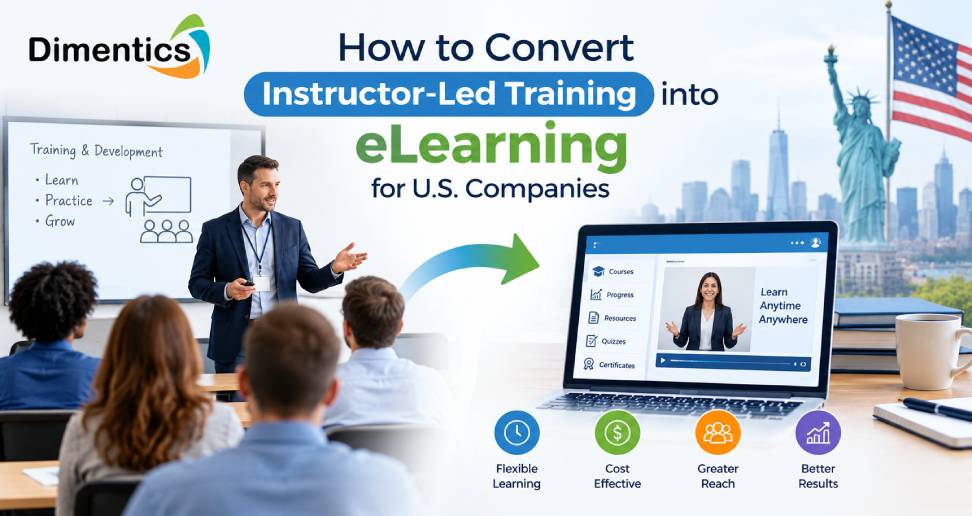
Employee training plays an important role in improving workplace productivity, developing professional skills, and supporting business growth. For many U.S. companies, instructor-led training (ILT) has traditionally been the preferred method of educating employees. Through classroom sessions, workshops, presentations, and face-to-face discussions, employees receive direct guidance from experienced trainers.
However, traditional training methods can become challenging when organizations operate across multiple locations, manage remote teams, or need to train large numbers of employees. Scheduling sessions, arranging trainers, booking venues, and maintaining consistent training quality can require significant time and resources.
This is why many organizations are transitioning from instructor-led training to digital learning. Converting existing training programs into eLearning allows businesses to deliver flexible, engaging, and consistent learning experiences.
With the right planning, instructional design, and technology, companies can transform traditional training materials into effective online courses without losing their educational value.
1. Evaluate Your Existing Instructor-Led Training Materials
The first step in converting instructor-led training into eLearning is reviewing the existing training content. Companies should examine their presentations, trainer notes, employee handbooks, recorded sessions, worksheets, assessments, and other learning resources.
The purpose is to identify which materials can be reused, updated, or redesigned for digital delivery.
Start by evaluating:
-
Training objectives: Identify the knowledge and skills employees should gain.
-
Course structure: Review the sequence of topics and learning activities.
-
Training materials: Collect presentations, videos, documents, and reference guides.
-
Employee requirements: Understand the experience and knowledge levels of learners.
-
Assessment methods: Review how employee understanding is currently measured.
Not every classroom activity should be transferred directly into an online course. Some materials may need to be shortened, divided into smaller lessons, or redesigned to suit digital learning environments.
2. Define Clear eLearning Objectives
After evaluating the existing content, organizations should establish measurable learning objectives for the digital training program.
Instructor-led training often relies on live explanations and discussions. In eLearning, employees need clear guidance about what they are expected to learn and accomplish independently.
For example, a traditional customer service training session may cover communication techniques, complaint handling, product knowledge, and customer satisfaction.
These subjects can be converted into specific digital learning objectives, such as:
-
Identify effective customer communication techniques.
-
Understand the process of handling customer complaints.
-
Apply problem-solving strategies in realistic situations.
-
Demonstrate knowledge through interactive assessments.
Clearly defined objectives help instructional designers organize the content and select appropriate digital learning activities.
They also allow organizations to evaluate whether the converted course delivers the intended training outcomes.
3. Break Large Training Sessions into Smaller Learning Modules
Traditional classroom training can last several hours or even multiple days. However, transferring lengthy presentations directly into an online course may overwhelm employees.
A better approach is to divide the training content into smaller, manageable learning modules.
For example, an eight-hour leadership workshop could be divided into separate modules covering:
-
Introduction to leadership principles.
-
Team communication and collaboration.
-
Decision-making and problem-solving.
-
Conflict management.
-
Employee performance management.
-
Leadership knowledge assessment.
Each module can include short videos, visual explanations, interactive exercises, and knowledge checks.
This approach supports microlearning, allowing employees to complete lessons at convenient times while maintaining their learning progress.
4. Transform Classroom Presentations into Interactive Digital Content
One of the biggest mistakes companies make when converting instructor-led training is simply uploading PowerPoint presentations into an online learning platform.
Although presentations can provide useful information, passive slideshows rarely deliver the same level of engagement as well-designed eLearning courses.
Instead, organizations should transform their classroom materials into interactive digital experiences.
Some effective approaches include:
-
Interactive presentations: Add clickable elements, animations, and knowledge checks.
-
Explainer videos: Convert complex topics into easy-to-understand visual explanations.
-
Scenario-based learning: Present realistic workplace situations that require employees to make decisions.
-
Simulations: Allow learners to practise tasks in a controlled digital environment.
-
Quizzes: Include short assessments to reinforce important concepts.
-
Downloadable resources: Provide reference documents, checklists, and job aids.
For example, a traditional workplace safety lecture can become an interactive course in which employees identify potential hazards, select appropriate safety procedures, and receive immediate feedback.
These activities make learning more practical and help employees apply their knowledge in real workplace situations.
5. Choose the Right eLearning Authoring Tools
Selecting suitable authoring tools is essential for developing professional and scalable eLearning courses.
U.S. companies should choose tools based on their training requirements, technical capabilities, budget, and employee learning preferences.
Some popular eLearning authoring tools include:
-
Articulate Storyline 360: Useful for developing interactive courses, branching scenarios, simulations, and assessments.
-
Articulate Rise 360: Suitable for creating responsive, mobile-friendly training modules.
-
Adobe Captivate: Supports software simulations, demonstrations, and interactive learning experiences.
-
Vyond: Helps create animated training videos and visual storytelling content.
-
Synthesia: Enables organizations to develop AI-powered presenter videos for digital training.
The right combination of tools can help businesses create engaging courses that work across desktops, laptops, tablets, and smartphones.
Companies should also consider whether their selected tools support SCORM or xAPI standards to ensure compatibility with their Learning Management System (LMS).
6. Integrate the eLearning Course with an LMS
A Learning Management System provides a centralized platform for delivering, organizing, and tracking employee training.
After converting instructor-led training into digital courses, organizations should integrate the content with an appropriate LMS.
An LMS allows companies to:
-
Assign courses to individual employees or departments.
-
Monitor course completion and assessment results.
-
Track employee learning progress.
-
Manage certifications and compliance training.
-
Generate reports to evaluate training performance.
-
Provide employees with access to learning materials.
For U.S. businesses with remote and geographically distributed teams, an LMS makes training easier to manage across different locations and time zones.
Companies should also ensure that their digital learning content works properly within the selected platform before launching it across the organization.
7. Make eLearning Accessible and Mobile-Friendly
Accessibility is an important consideration when developing digital training programs. Employees may have different learning preferences, abilities, devices, and working environments.
Companies should design courses that support inclusive learning and provide a consistent experience for different users.
Consider implementing the following practices:
-
Add captions and transcripts to video content.
-
Provide alternative text for meaningful images.
-
Ensure keyboard accessibility for interactive elements.
-
Use readable fonts and sufficient colour contrast.
-
Organize content with clear headings and navigation.
-
Make courses responsive across different screen sizes.
Following accessibility guidelines such as WCAG can help organizations create more inclusive learning experiences.
Mobile compatibility is equally important because employees may need to complete training while travelling, working remotely, or accessing company resources outside traditional office environments.
8. Test the Course Before Launching It
Before releasing the converted eLearning program, companies should conduct proper testing to identify technical and instructional issues.
A pilot launch with a small group of employees can help determine whether the course is easy to understand, engaging, and relevant to actual workplace requirements.
During testing, evaluate:
-
Content accuracy and instructional quality.
-
Navigation and user experience.
-
Video, audio, and animation performance.
-
Assessment functionality.
-
Mobile and browser compatibility.
-
LMS tracking and reporting.
-
Accessibility and usability.
Collect feedback from employees, trainers, subject matter experts, and managers. Use their suggestions to improve the course before making it available to the entire workforce.
9. Measure Training Effectiveness and Improve Continuously
Converting instructor-led training into eLearning should not be considered a one-time project. Companies need to evaluate whether their digital learning programs are achieving the intended results.
Organizations can measure effectiveness through several performance indicators:
Course completion rates: Identify how many employees successfully finish assigned courses.
Assessment scores: Evaluate whether employees understand the training material.
Learner engagement: Monitor participation, interaction, and time spent on learning activities.
Employee feedback: Collect opinions about course quality, usability, and relevance.
Workplace performance: Examine whether employees are applying newly acquired skills in their daily responsibilities.
For example, after converting sales training into eLearning, a company can evaluate whether employees demonstrate improved product knowledge, stronger customer interactions, and better sales performance.
Regular content updates and feedback-based improvements help maintain the quality and relevance of digital training programs.
10. Work with an Experienced eLearning Development Partner
Converting instructor-led training into effective eLearning requires more than technical conversion. It involves instructional design, content development, multimedia production, accessibility, and learning technology expertise.
For organizations with limited internal resources, partnering with an experienced eLearning development provider can simplify the transformation process.
A professional development partner can help businesses:
-
Analyse existing classroom training materials.
-
Develop structured digital learning strategies.
-
Convert presentations into interactive courses.
-
Create videos, simulations, and assessments.
-
Develop microlearning and blended learning programs.
-
Prepare LMS-compatible training content.
-
Improve employee engagement and knowledge retention.
Working with specialists also helps organizations maintain consistent instructional quality while managing large-scale training requirements.
How Dimentics Helps U.S. Companies Modernize Employee Training
Dimentics supports organizations looking to transform traditional training materials into engaging digital learning experiences. Its expertise includes custom eLearning development, instructional design, microlearning, video-based learning, and blended learning solutions.
Through its corporate eLearning and training modernization services, Dimentics helps businesses modernize classroom-based training, develop interactive learning modules, and create scalable training programs using tools such as Articulate Storyline, Rise 360, and Synthesia.
Whether an organization wants to digitize existing training content, improve employee engagement, or develop a structured digital learning program, professional eLearning development can support its workforce training objectives.
Conclusion
Converting instructor-led training into eLearning is an effective way for U.S. companies to modernize employee development and make training more flexible, accessible, and scalable.
By evaluating existing materials, defining learning objectives, developing interactive modules, selecting appropriate authoring tools, and integrating courses with an LMS, businesses can create meaningful digital learning experiences.
However, successful conversion requires more than transferring classroom presentations online. It requires thoughtful instructional design, engaging content, accessibility, and continuous performance evaluation.
With the right strategy and an experienced eLearning development partner, organizations can build effective digital training programs that prepare employees for changing workplace demands and support long-term business growth.
Latest Blog
- Custom Employee Onboarding Training Development: A Guide for U.S. HR Teams
- How to Convert Instructor-Led Training into eLearning for U.S. Companies
- Hire eLearning Developers in the USA: Skills, Costs, and Project Considerations
- White-Label eLearning Production: How Agencies and Training Providers Should Vet an Overflow Partner
- Outsource Instructional Design Services in the USA: A Complete Guide for L&D Teams